← Back to Home

How to Think About It

No single image holds the whole psyche. These metaphors work as lenses - each one highlights a different benefit of mapping instinct, flow, and where energy narrows. Use the one that makes your next step obvious.

Debugger for the Soul
Generated illustration 8

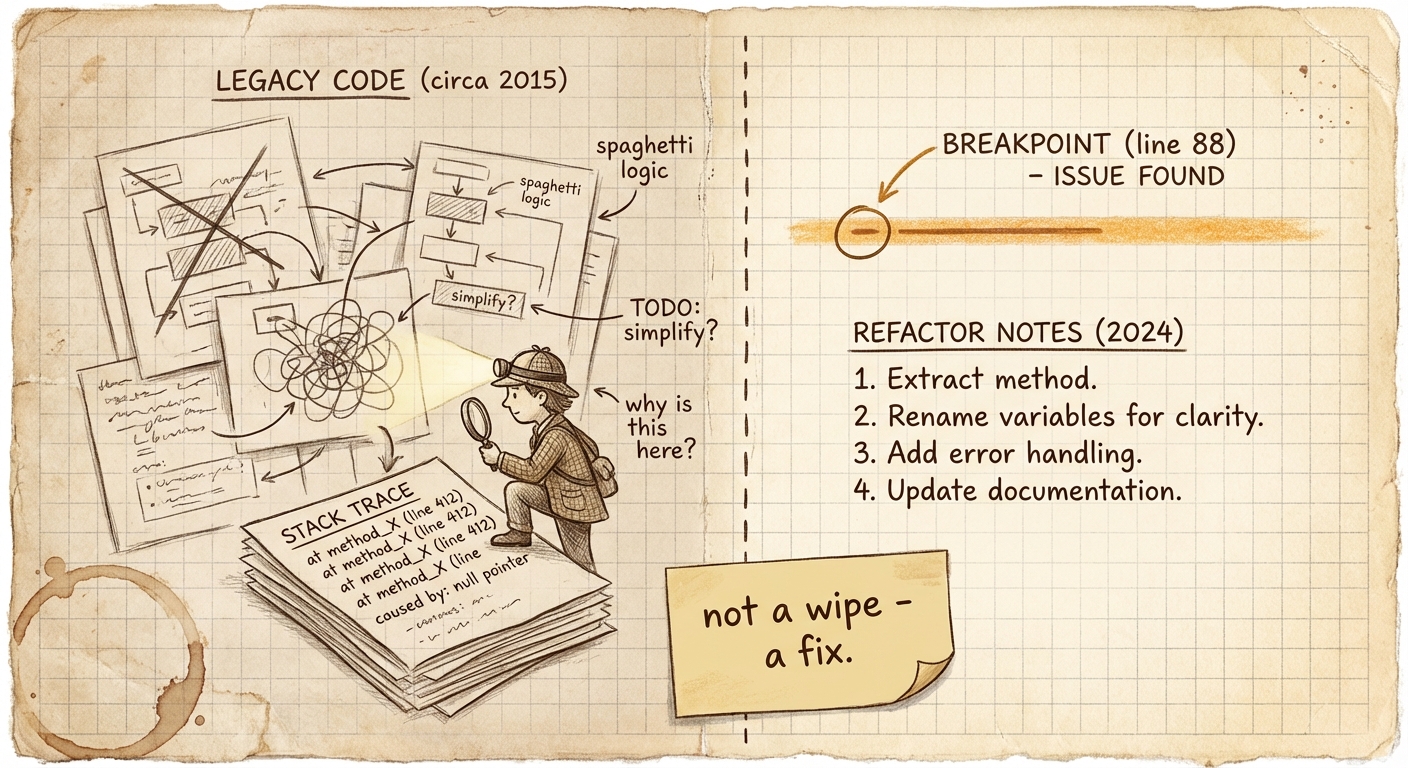
If you have ever shipped software, you already know the difference between a healthy system and one that mostly works until it does not. Your psyche runs on patterns too - some brilliant, some legacy, some plain buggy. The mind does not compile into a single file; it functions as a repo with contributors you did not always choose. Parents, teachers, culture, and younger-you all committed lines that made sense at the time.

WinnerScript does not promise to reformat your hard drive. That fantasy amounts to lobotomy dressed up as self-improvement. What we offer comes closer to a debugger: tooling that helps you localize what actually happens when life throws a stack trace. Which instruction throws under fatigue? Which function loops forever under stress? Which variable someone set to the wrong default twenty years ago - and still gets read every Monday morning?

R.I.F.T. (Restriction In Flow Transition) fits this picture like a memory leak you can finally see in the profiler. Absorption, organization, and externalization ought to work together. When one phase hoards energy while another starves, the system can seem fine on the surface - then RAM climbs, fans spin, and you wonder why you feel drained after a normal day. Mapping a R.I.F.T. reveals the allocation that never gets freed: not "you are broken," but "here the leak shows up."

The Loser Script acts as the legacy module - inherited code that still runs because nobody documented what purpose it served. It protected you once. It may still contain useful guards. But when it owns the main thread, you pay interest forever. WinnerScript, in this metaphor, serves as the refactoring toolkit: breakpoints, diffs, tests, and a sane commit message. You decide whether to patch, rewrite, or leave a line in place on purpose. The map does not steal your authorship - it makes editing possible.
Archaeology of Flow

Generated illustration 9

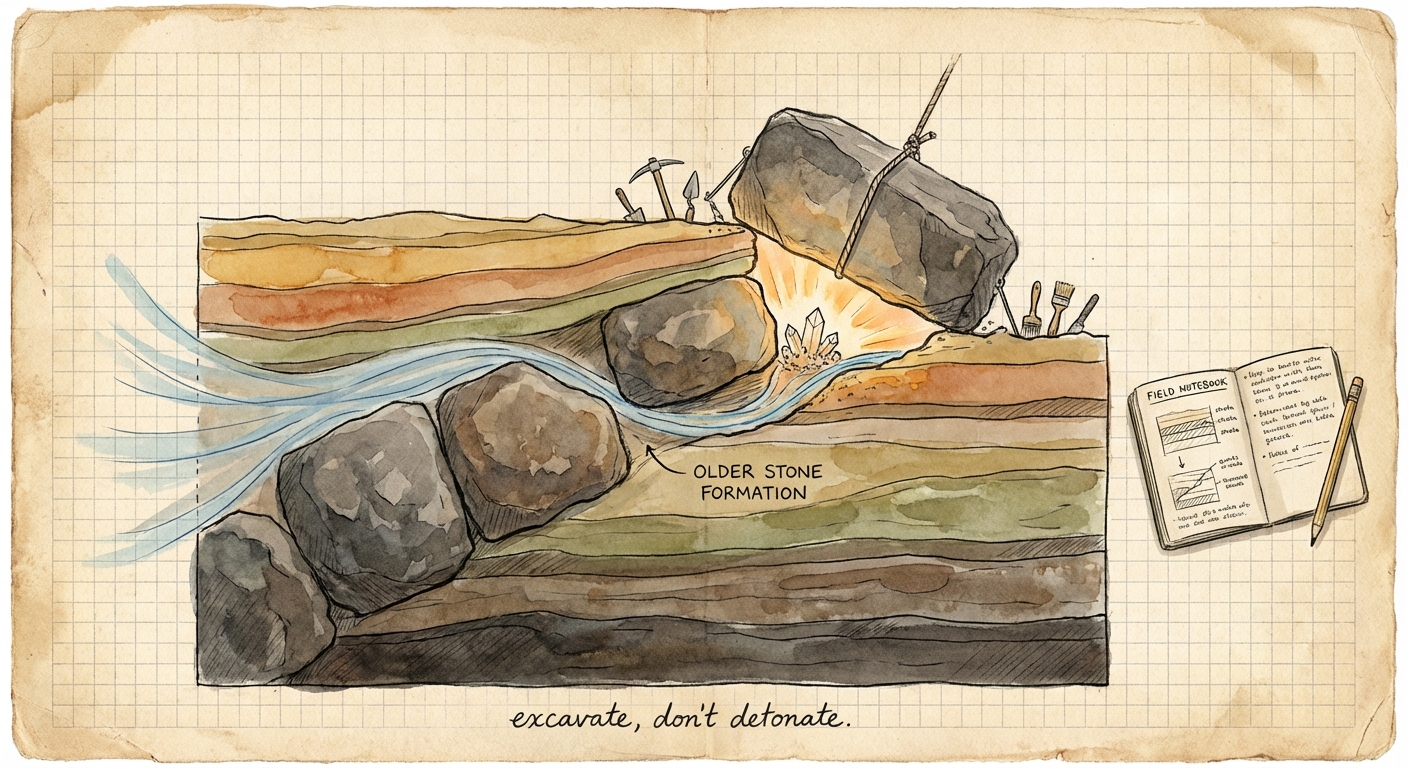
Your life energy wants to move. Picture more than poetry alone - you feel it when you find rhythm, fall in love with a project, or settle into peace after a hard truth spoken cleanly. Flow behaves like water seeking the sea: it follows gravity and contour. The trouble lies not in the water. The trouble sits in what got built in the way.

Some dams took shape when parents feared the current. Some when teachers needed quiet classrooms. Some when you chose restraint, for excellent reasons - slowing down kept you safe when speed meant danger. WinnerScript helps you map those dams and the channels that still work. We did not show up to blow the valley open. Dynamite makes great drama and terrible ecology. We bring archaeology tools: soft brushes, picks, patience, and labels for each layer.

Layer by layer, you get to ask better questions. Does this barrier still serve me? Did it ever count as fully mine, or did I inherit the blueprint? What happens if I remove one stone - not the whole wall - and watch for a season? The benefit proves practical: you stop treating your own nervous system as the enemy. You start collaborating with the structure that kept you alive.

The somatic layer in this metaphor forms the artifact bed: the place where story meets body. Tight jaw, shallow breath, braced shoulders - those do not qualify as "random." They count as finds in the trench. When a map names them without shame, you can decide what belongs in a museum (honor it and leave it) and what belongs in the lab (study it) and what can return to the river (release it). WinnerScript pays off in curious agency - not a single correct answer, but a method that respects how long the ground took to form.

RPG Character Sheet

Generated illustration 10

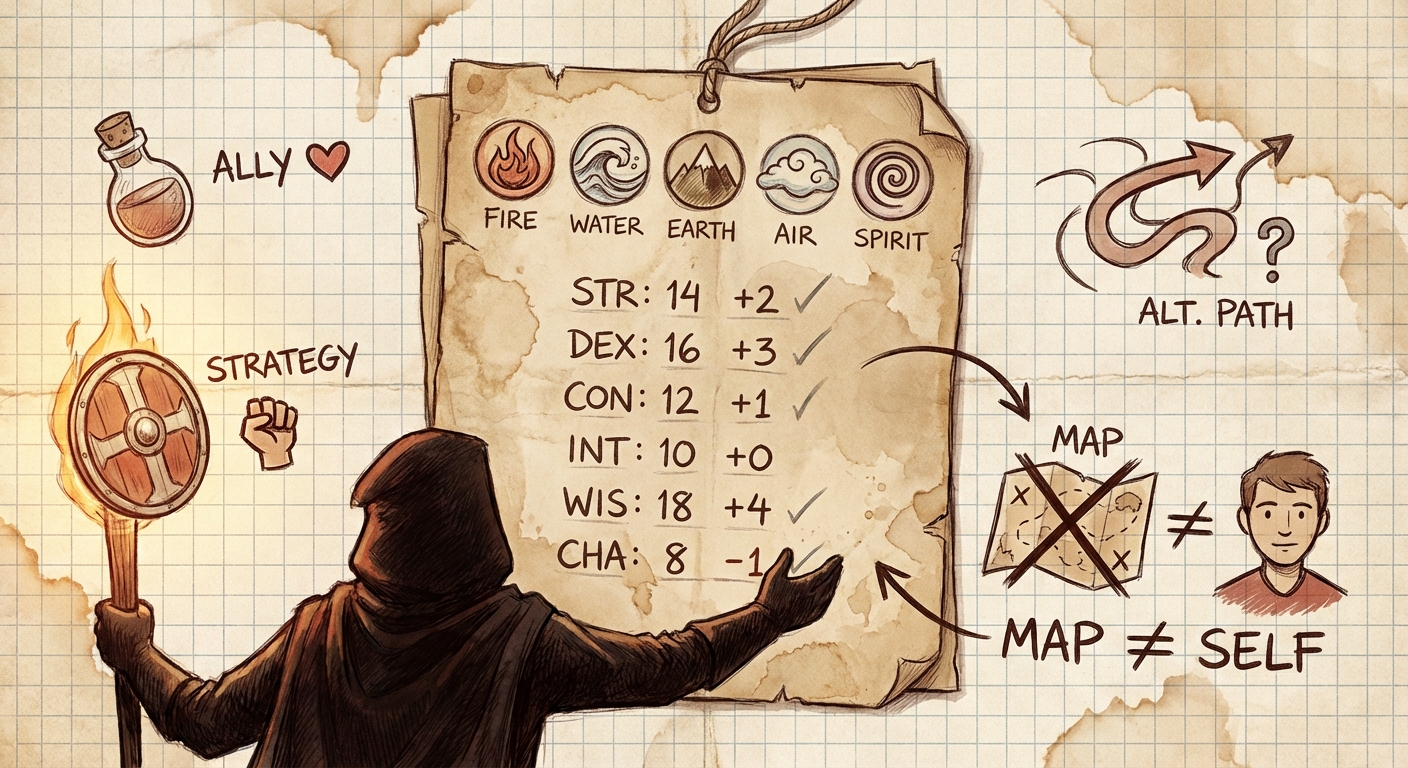
In a tabletop or video RPG, the character sheet counts as sacred clutter: numbers, skills, inventory, notes in the margin where the last session went off the rails. The player does not reduce to the sheet. The player reads the sheet and chooses strategy - when to spend a scarce resource, when to flank, when to talk instead of fight.

WinnerScript treats your instincts the same way. A number or a rank does not pass verdict on your soul. It conveys information about loadouts and tradeoffs. Low "charisma" in the social sense does not ban you from social missions. It signals that the straight-line route costs more stamina - so you bring potions (partners, allies), different armor (preparation, environment design), or you pick a side quest that plays to your actual build.

This metaphor protects you from the cruelest lie of pop psychology: that one stat defines the whole game. Transmuted access - doing something outside your "natural top stat" on purpose - does not count as fake. Experienced players run hard content exactly like this. They do not treat the sheet as wrong. They stack the deck humanely: rest, coaching, context, timing, and honesty about the cost.

From WinnerScript as a character sheet you gain clarity without captivity. The map stays complete enough for usefulness, honest enough to earn trust, and flexible enough to update when your campaign changes jobs, relationships, or health. You remain the one holding the pencil.

Navigation, Not Just Terrain

Generated illustration 11

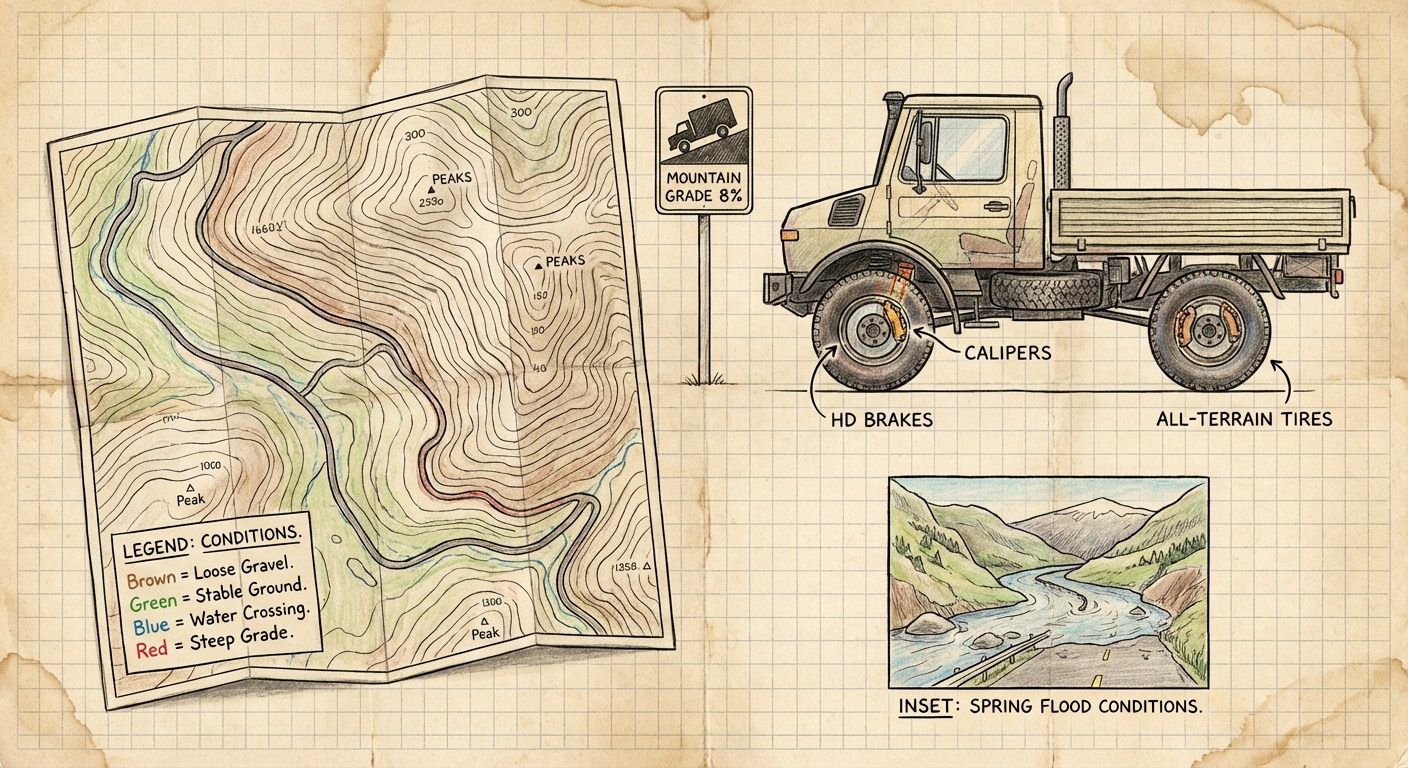
Most personality products stop at topography. They point at the mountain and the valley as if the act of looking could replace the act of arriving. That works on postcards. For Tuesday afternoon - when you have to descend the grade in the rain with bad brakes and a deadline - it weakens.

WinnerScript aims closer to a driving course plus vehicle mechanics. Yes, you see the mountain - elevation, exposure, where the switchbacks tighten. And this marks what matters for you on that road: what needs maintenance before you commit to the route, where hydroplaning grows likely, which season floods the low crossing, and what a sane pace looks like if your suspension already feels tired.

You gain risk intelligence without catastrophizing. Think of yourself not as "a bad car" but as a specific machine with wear patterns, torque, and blind spots - and maps that include road conditions change outcomes. When the tool names both terrain and interface - how your instincts meet the world - you spend less energy blaming yourself for gravity.

Use this metaphor when you want outcomes, not labels. Terrain tells you what exists. Navigation tells you how to move through it with fewer crashes - and when to choose another pass entirely.

Lightbulb vs. Laser

Generated illustration 12

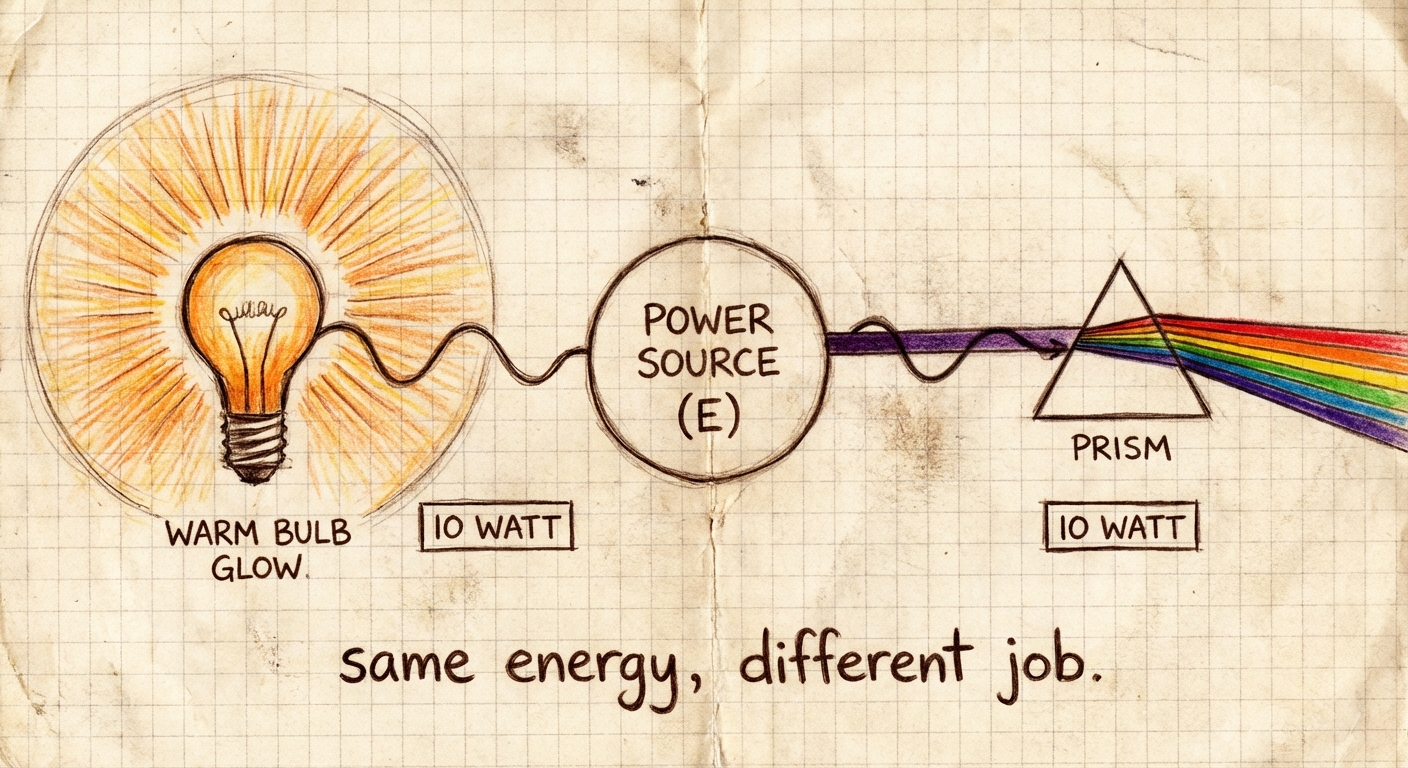
Optics offers a clean reminder that "how much strength you carry" misses the mark. Ask instead how your strength takes shape. A lightbulb and a laser can draw from the same power budget. One floods a room with workable visibility. The other cuts a narrow channel with surgical intensity. Neither ranks morally superior - designers built them for different tasks.

In WinnerScript language, a high instinct with lower depth often behaves like a lightbulb: broad availability, quick activation, many situations get a little illumination. A lower instinct with high depth behaves more like a laser: quieter until aimed, then penetrating - devastatingly useful when pointed at the right problem, wasteful or harsh when swung at random.

Aim counts as the product benefit. When you know which optical profile you favor, you stop asking the laser to wallpaper the room, and you stop asking the bulb to etch steel. You pick missions that match the beam - or you engineer the environment (time, support, scope) so the tool you have matches the tool the job needs.

This metaphor pairs well with partnership and pacing. Sometimes you borrow someone else's beam for a task. Sometimes you narrow your own. WinnerScript does not rank you like a leaderboard. It helps you align energy with intention - so the same life feels less like accidental glare and more like chosen focus.

same energy - different job

A Map That Names Itself a Map

Generated illustration 13

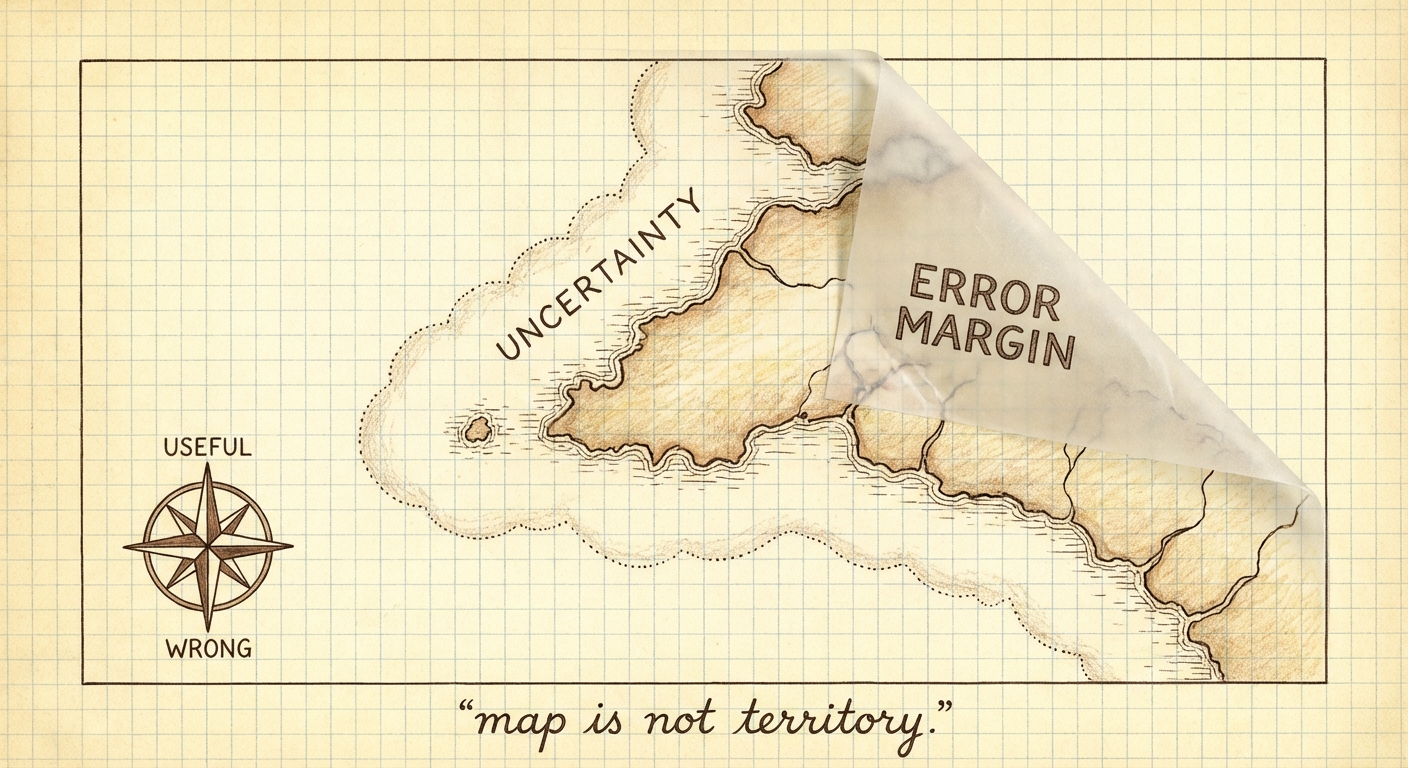
This one serves as the meta-metaphor - the one that keeps the others honest. Alfred Korzybski's line still works as the antidote to map addiction: the map is not the territory. Most models forget to say so out loud. They speak in the tone of final truth. They sell closure. Human beings crave closure - and subtle harm hides exactly in closure, because life keeps updating faster than any PDF.

Robert Anton Wilson's model agnosticism pushes the same humility further: hold models lightly, compare outputs, keep multiple maps for different jobs, and refuse the cult of certainty. We built Winner Script in that spirit. We do not pretend we speak for your soul. We offer a map - one that says so in the report, in the philosophy, and in how we talk about time ("snapshot," not "sentence").

You gain psychological safety plus intellectual rigor as the practical benefit. When a tool admits its own error margin, you can use it fiercely without fusing with it. You can take the insight, test it in the world, and discard what fails - without needing to throw yourself away with the draft. That marks no weakness. Adults learn this way.

If this metaphor tops your list, you probably belong among people who do their best work with epistemic room to breathe. WinnerScript aims for the map you unfold in the rain: useful, marked, honest about creases - and always reminding you that the territory still waits out there, wilder and richer than paper.

map ≠ territory - Korzybski

Pick the metaphor that fits. Then start your map.

Join Beta Waitlist